Cover-ups · 5 min read · Silas Crane
Twenty years of burying other people's decisions has taught me this: every cover-up is possible, but not every cover-up is advisable. Here's how to tell which one yours is before you pay for it.

Dark old work is good news
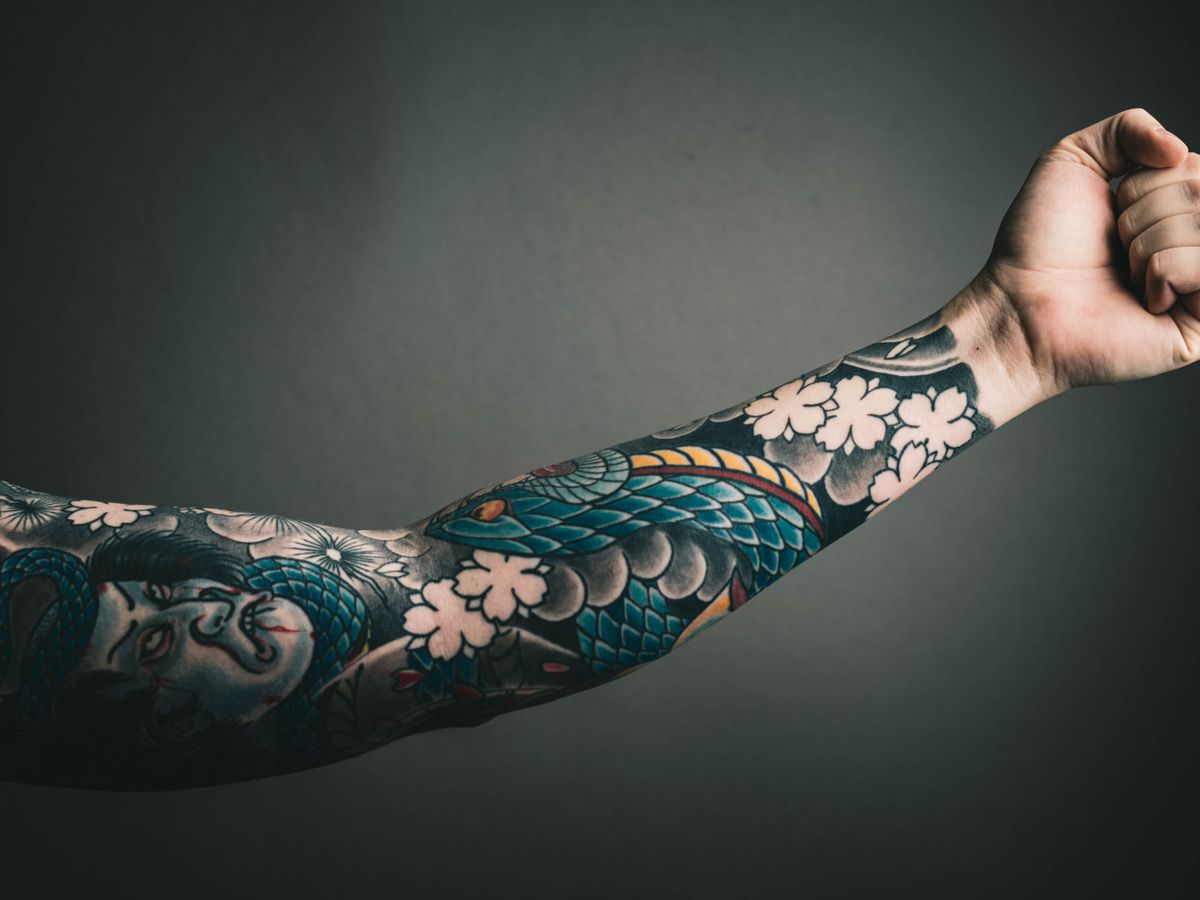
Counterintuitive but true: dense, dark old tattoos give us the most to build with, because the new design can go darker still with confidence. Faded pastels and scarred colour are the hard cases — there's less room to manoeuvre, and that's where laser fading first earns its fee.
Black isn't always the answer
Clients arrive assuming the fix is a black box. Often the fix is direction: a blast-over in deep blue-black with texture reads as a design, while a flat blackout reads as a redaction. And sometimes the bravest answer is a rework — keeping the bones of a decent tattoo and rebuilding everything around it.
I'd rather lose a booking than promise a disappearance I can't deliver.
Ask these three questions at any consult
- What does my old ink force about the new design's size and darkness?
- Would one or two laser sessions buy me a meaningfully better result?
- What will this look like healed in five years, not fresh on day one?
If an artist can't answer all three with specifics about your skin, get a second opinion — preferably ours.